A Regional Journey of Learning, Collaboration, and Youth-Led Impact
The Global Shapers community thrives on regional events that foster learning, sharing, and collaboration. “Shaping ASEAN” was such a platform to learn about this regional unity and its potential for a brighter future.

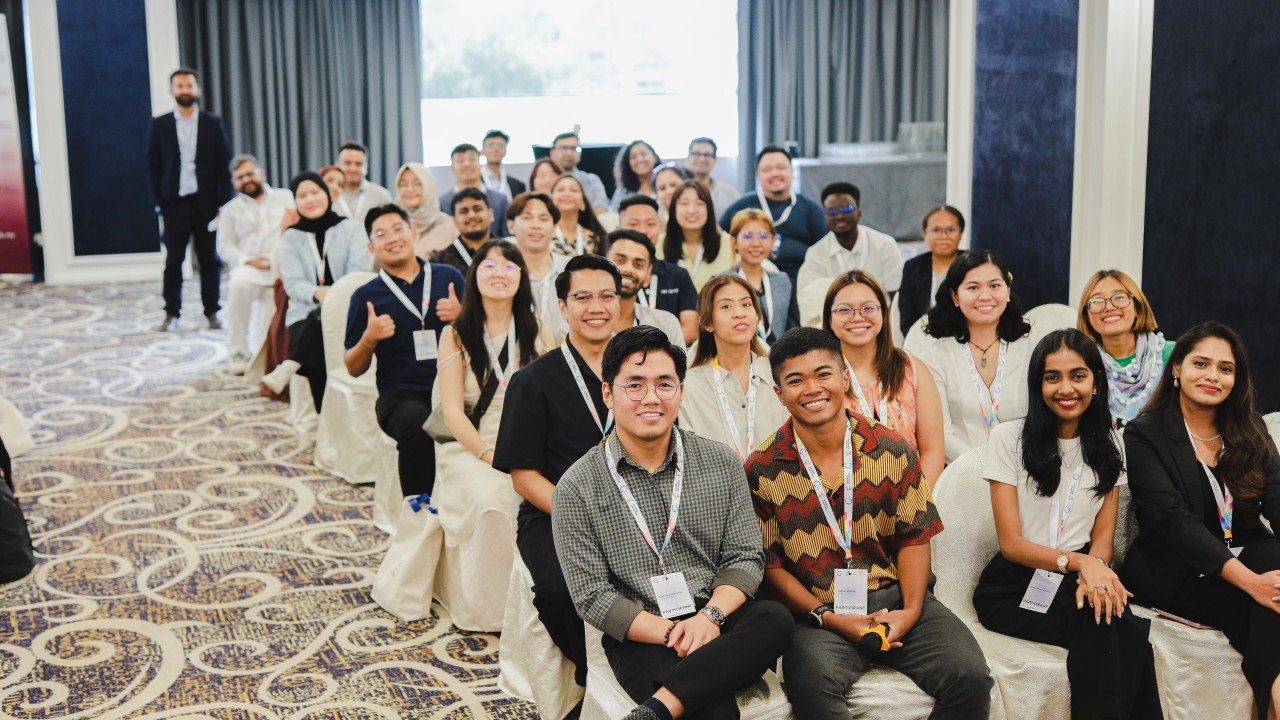
I, along with Sambridh Timilsina from Global Shapers Kathmandu, attended this regional event from November 7-9, hosted by the Global Shapers Kuala Lumpur (KL Hub) in Malaysia. The event, centred on the recently concluded ASEAN Summit 2025, showcased projects from various ASEAN hubs and offered deep dives into Technology, Startups and AI, Climate Action, and Mental Health.
As this was our first visit to Malaysia, we arrived two days early to explore the city’s vibrant culture, food, and market. We explored Jalan Alor Street, the iconic Petronas Towers, and the Kuala Lumpur City Centre (KLCC).
The “Shaping ASEAN” event was started with a keynote address by Rebekah Yeoh, Corporate Financial Director at YTL Corporation and Vice-Curator of the KL Hub in 2016/17. She emphasised the powerful collaborations emerging from young minds within communities like Global Shapers, all endeavouring for impactful change. Following this, a fireside chat featured Dr Cheng Ming Yu, the founding curator of the KL Hub and Director of the Institute of Management and Leadership Development (IMLD), moderated by Kahmun Yap, Curator of KL Hub (2025/26). This session discussed the KL Hub’s starting days and the journey of establishing this community that empowers youth to create impact.

The following session focused on the ASEAN Summit. ASEAN, the Association of Southeast Asian Nations, fosters networks across Indonesia, Malaysia, Philippines, Singapore, Thailand, Vietnam, Myanmar, Cambodia, Timor Leste, Lao PDR, and Brunei Darussalam. The ASEAN Summit 2025 concluded with key discussions on economic resilience, digital growth, and inclusive development. The first panel, themed ‘Outlook on ASEAN for the next decade’, introduced speakers such as Syairah Moh Ridzuan, Climate Policy Strategist at Bank Negara Malaysia; Datuk Md Arif Bin Mahmood, Chairman of KPJ Healthcare Berhad; and Dr. Ong Kian Ming, Adjunct Professor at Taylor’s University. This session delved into ASEAN’s 20-year vision, ASEAN 2045, discussing how energy transition and the blue economy drive climate action through greenhouse gas reduction. It also explored strengthening the private sector with Foreign Direct Investment (FDI) across FinTech and the Enterprise Payment Gateway (EPG) ecosystem, alongside establishing a robust Digital Public Infrastructure (DPI). ASEAN aims to foster mutual learning, knowledge exchange, and innovation for tomorrow.

The next highlights were the ASEAN hubs from various cities across the region, which presented diverse projects covering Mental Health, Reskilling the Future, Climate Action, Tech and Innovation, Education, and Civic Engagement. These projects showed up the significant impact achieved in their respective communities, yielding great impacts.
The next day’s workshops revolved around Tech, AI, and Startups; Climate; and Mental Health. I joined the Tech track, which hosted a panel discussion with various tech experts, startup founders, and innovators. Mark Koh, former CEO of Supahands, opened the session with a keynote, sharing his journey of building AI-enabled companies. He encouraged us to experiment with AI and develop local, impactful solutions for diverse users, asserting, “We are the future with AI.” He stressed the importance of gaining hands-on experience before becoming obsolete.

Daniel Cerventus Lim moderated the panel discussion, featuring Ghanzafar Iqbal, Head of Business Development Startups, AWS Malaysia, Singapore and Pakistan; Prashant Kumar, CEO of Entermind; and Crystal Saw, CEO of Ontonoco AI. The discussion highlighted the evolution of data science with AI, emphasising the need for relevance and competitiveness. While AI existed previously, OpenAI’s ChatGPT democratised its use, prompting companies to experiment and build expertise. The panellists discussed how readily one can create websites with tools like Lovable and Supabase, but acknowledged the complexities of AI in the backend, suggesting that a backend developer significantly eases the process. They also shared how multiple AI products enable individuals to build businesses within six months.
The final session took the form of a workshop where Andrew Teow guided us in hands-on AI exploration. His #VibeCoding session encouraged staying relevant and experimenting with AI on our own ideas. He stressed understanding the ‘why’ behind product creation and then guided us through the building process. We explored developing products using Lovable (for visualising and generating frontend), WindSurf (for refining logic and modifying code), and Vercel (for one-click deployment).
After the sessions, we visited Batu Caves, a three-hundred-step uphill temple dedicated to the deity Murugan, with deep roots in Tamil Hinduism. The Murugan statue outside the hill stands as one of the largest in the world.
Our final day was a market excursion and cultural immersion at Central Market, where we tried our hand at Batik painting. We also played Congkak (spelt differently across regions), a popular traditional game in Malaysia and the ASEAN region, often enjoyed as a family bonding activity.

The event brought together 70 Shapers from 30 different hubs across ASEAN and globally, all united by the theme of ‘Forging Ahead Together’. The three days were filled with one-on-one discussions, project sharing, mutual learning, and idea exchange, creating a memorable, impactful, and energising experience. We returned home with invaluable insights and lessons to share and build upon.
Written by Saurav Thapa Shrestha, Global Shapers Kathmandu Hub