How often do we truly see young people in politics – not just waving flags, camping out, or leading college unions – but taking part in mainstream decision making? Too often, youth are locked out by tradition, hierarchy, and privilege.
As a young woman who has spent years supporting youth political engagement, I have met hundreds who hunger not to inherit the political system, but to reshape it. But in every discussion, one word always dominates: power. What we often forget – what I have come to believe – is that power must be accompanied by lawful process, the right structures, and a discourse that includes all voices.
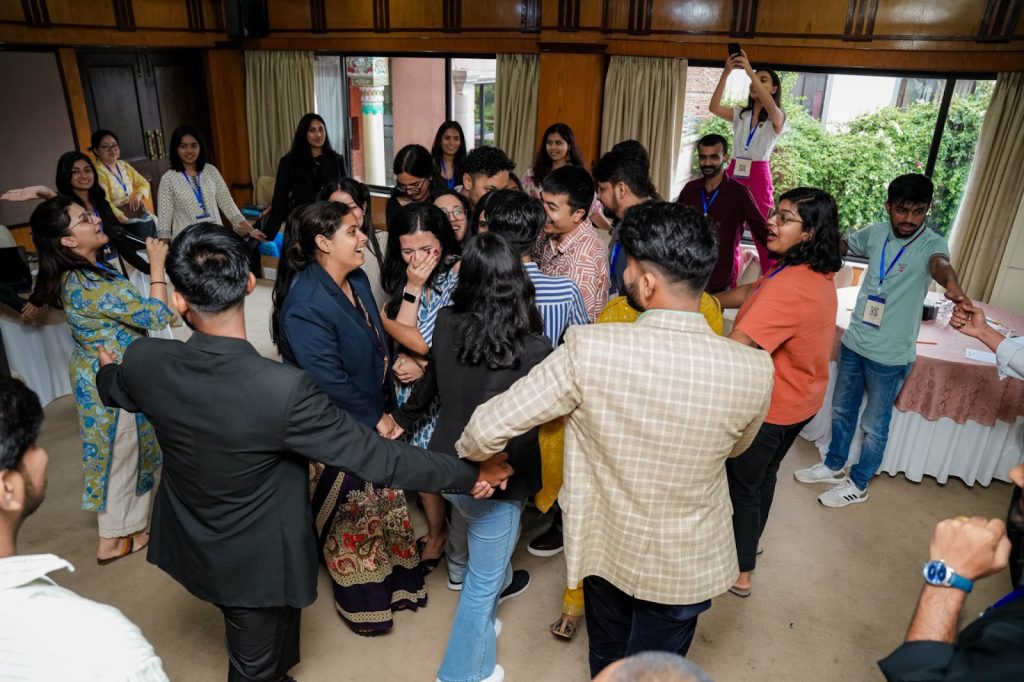
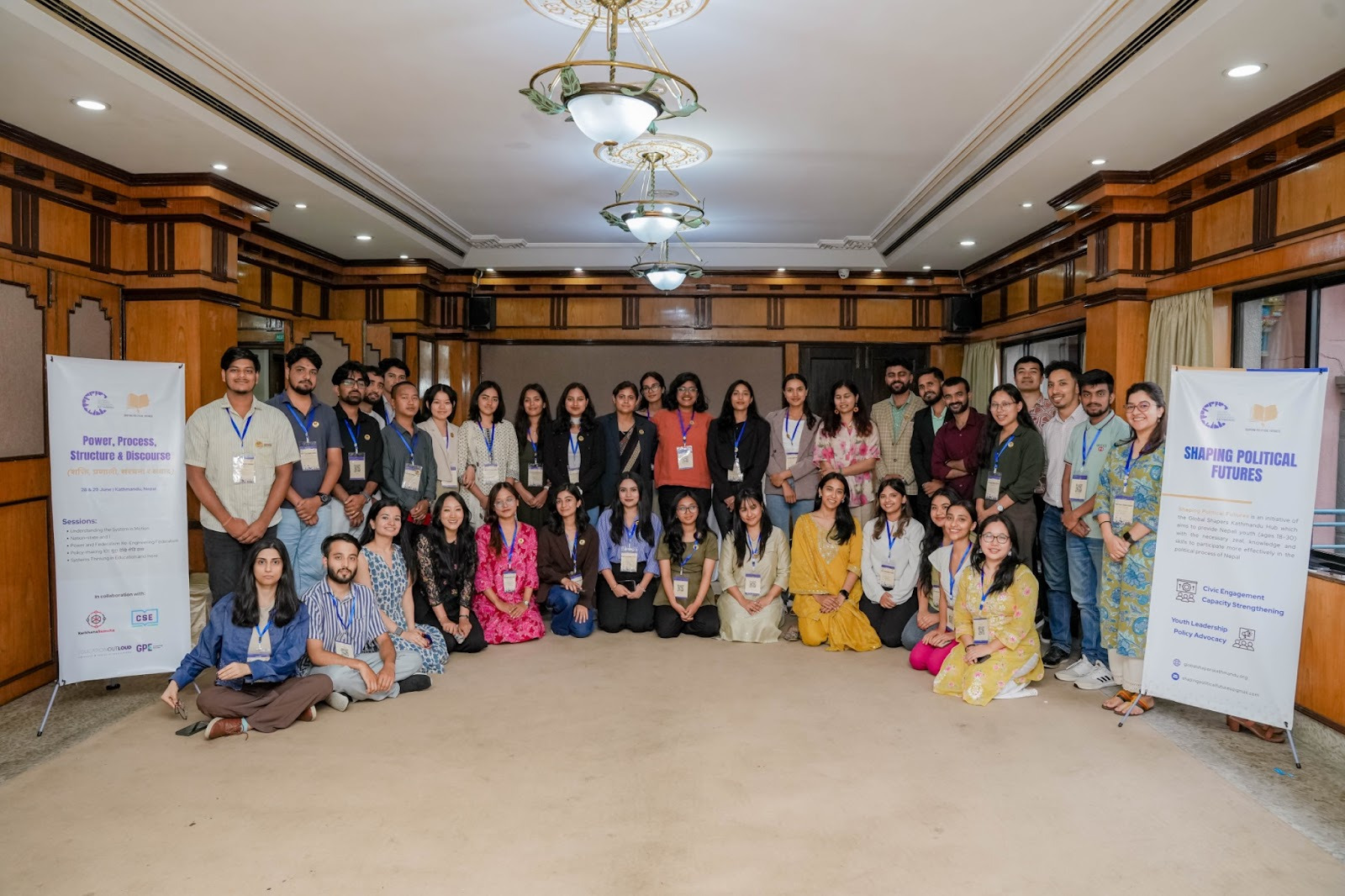
That conviction became real for me in July, during a two-day residential workshop on Active Citizenship: Power, Process, Structure, and Discourse, organized by my team at Shaping Political Futures. Before that, I accepted inclusion in principle – but I had not grasped just how foundational it could be. For 48 hours, inclusion was not a policy to quote. It was a circle of voices learning to listen, challenge, and imagine together. We brought together 28 young leaders from across Nepal: 18 women and 10 men; among them 9 Indigenous people, 7 Madhesi/Terai, 2 Dalit, and 10 Brahmin/Chhetri. Over two days, they debated, reimagined, and defined what inclusive democracy might look like. Watching young people from different identities sit side by side – carrying stories of struggle, identity, and hope – inclusion stopped being an abstract ideal. It became a living process.
Thomas Axworthy once wrote, “Democracy is judged by the way the majority treats the minority.” In that small, vibrant room, I saw that test in motion. Inclusion begins with rights, but it must grow into participation, representation, and fairness in outcomes. After that workshop, my belief shifted: political transformation depends not just on who holds power, but how we hold space.
In Nepal today, youth make up about 42.5% of the population, and over 50% of registered voters are aged between 18 and 40. Yet in the federal House of Representatives (275 seats), only about 11% of MPs are under 40. Similarly, over 41% of elected local representatives fall in the 21–40 age group. These numbers show a yawning gap between youthful voice and actual representation.
During the workshop, we studied how inclusion cannot be achieved by policy alone. It starts with how we see problems, how we imagine solutions. Through systems thinking we traced how something as local as irregular garbage collection connects to municipal budgets, federal coordination, and citizen participation. When we see the web instead of a strand, we begin to act with purpose. Speakers like Kailash Rai and Hari Sharma reminded us that politics is not only governance; it is the invisible hierarchy that shapes everyday life-who gets to speak, who decides, who is silenced. Participants wrote letters to Members of Parliament, practiced policy making, and reflected on their positionality in systems of privilege and exclusion.
The most powerful realization was this: inclusion isn’t a checkbox. It’s something one lives every day. It starts with who you bring into the room, whose stories you make space for, and how you choose to listen when someone’s truth doesn’t feel like your own. Power isn’t confined to parliament or policy; it exists in classrooms, in conversations, in the courage to show up. Most of all, I learned that youth do not need permission to participate. We are already there. Seeing young people from Madhesh, from Indigenous communities, from the hills sit together, question the system, and dream out loud reminded me why this work matters. Democracy is not a building in Kathmandu. It is a living system shaped by everyday choices, conversations, and the courage to build something new.
Ishika Panta
Project Co- Lead of Shaping Political Futures, GSKH KTM Hub